

Invisible Value
Why Intangible Value Now Dominates, and What to Do About It

Introduction
Intangibles now make up most of the stock market’s valuation. At the same time, many businesses still see intangible value as a series of niche areas for specialists such as marketers, insights teams, IP lawyers, and innovation managers.
At the strongest businesses, executives recognize that managing intangible value in aggregate is essential. High-performing teams work together effectively to understand how to coordinate the various forms of intangible value that drive long-term business success. In contrast, atomized approaches deliver atomized results.

The Intangible Economy
As of 2025, approximately 92% of the S&P 500's market value was attributable to intangible assets and other non-physical sources of value: intellectual property, software, patents and trademarks, customer relationships and data, know-how, brand value, and organizational capital. The remaining ~8% was more directly tied to traditional tangible assets, such as property, plant, equipment, and materials.
Over time, value has migrated away from the isolated production of goods and toward the coordination of increasingly complex systems that deliver meaningful outcomes to customers. As manufacturing and distribution capabilities for physical products became more accessible, value shifted to those who could integrate multiple elements—product, service, experience, distribution, and meaning—into more comprehensive solutions for increasingly complex customer needs and problems. The physical objects remain important, but are now just one part of a broader value creation system.
With a market cap of ~$4.8 trillion, NVIDIA is now the world’s most valuable company: over 99% of that is intangible value. The valuation of this single technology company now exceeds the total market capitalization of the FTSE 100 Index in London by a wide margin.
NVIDIA is the most recent and dramatic example of a process that has been playing out for decades, and not just in technology companies. As the chart below shows, this is a radical departure from the situation 45 years ago. In less than a single human lifespan, the entire structure of value creation has completely inverted. This is not merely an accounting shift, but a reflection of where competitive advantage and future cash flows are actually generated. For decades, advanced economies have experienced a one-way direction of travel.
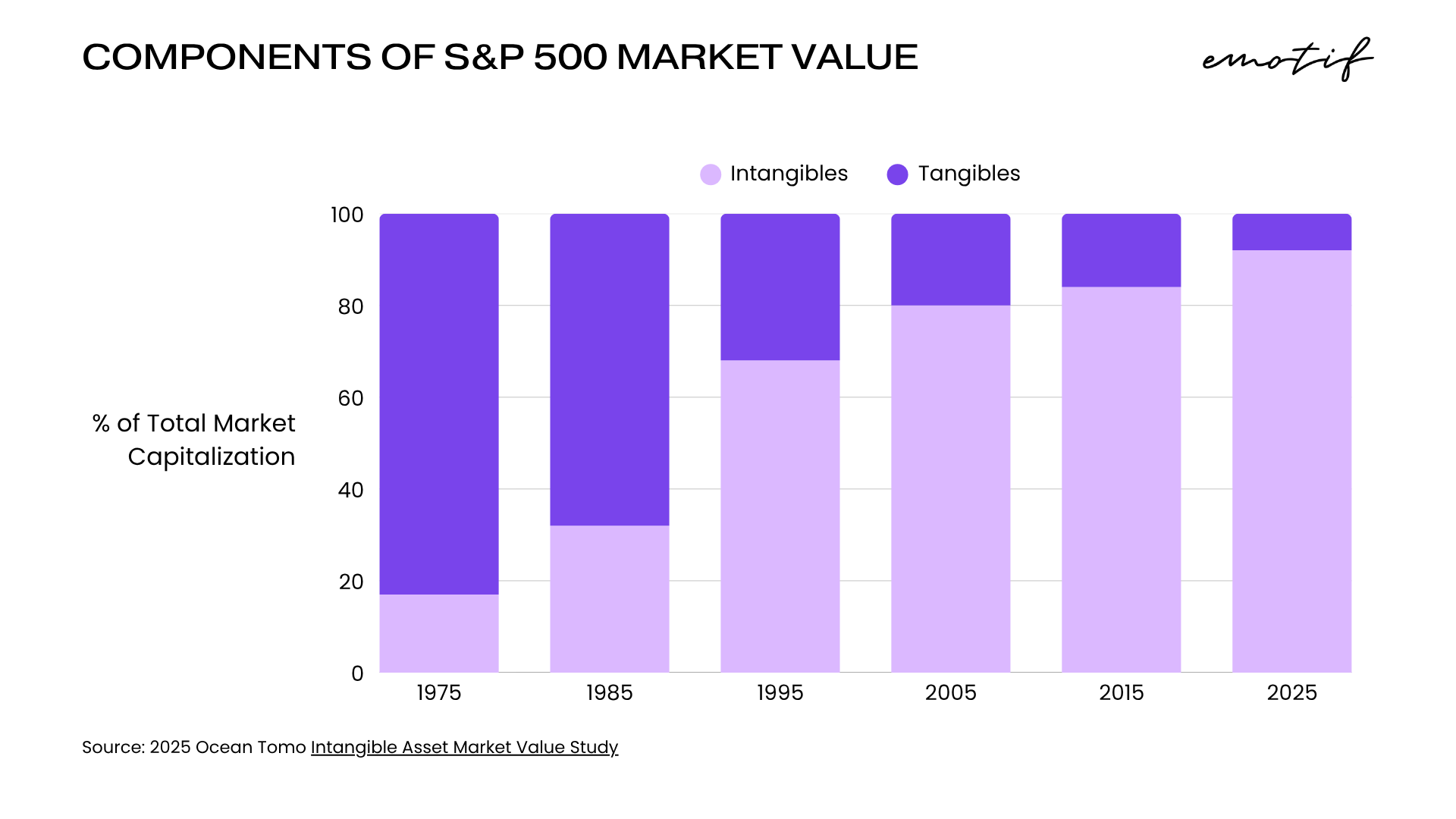
This share remained stable during the most aggressive interest-rate hikes in four decades, even as traditional theory suggests intangible-heavy companies should be vulnerable. This resilience points to structural forces, not just cyclical factors. Skeptics might say high market multiples inflate the intangible share—today’s S&P 500 P/E is about 28, versus a long-term average of 16. While enthusiasm plays a role, the trend started long before current valuations: intangibles surpassed 50% of the S&P 500 in the late 1980s, 80% by the mid-2000s, and stayed above 90% through multiple cycles. The shift remains true even with lower multiples.

The real reason why Apple was so successful
Apple Computer's success during this era stems not just from its vertical integration of hardware and software or from 'owning the customer relationship.” While those factors contribute, they don't fully explain achievement. The core reason lies in its ability to integrate and layer multiple sources of value, creating a unified and compelling experience for the customer.
Why did the iPod reshape the market and enable the iPhone, while the Zune faltered? Because the iPod wasn’t just a “point solution” device—it was a tightly integrated system of hardware, software, and customer experience that fit clearly and usefully into people’s lives. That coordinated effort across hardware, software, marketing, partnerships, and music licensing solved the customer’s problem completely and with minimal friction. The Zune, by contrast, was essentially a hard drive for MP3s with a headphone jack—too narrow and incomplete to be a thorough solution for the job customers needed done.
Apple created exceptional, industry-beating returns by integrating all essential elements to significantly enhance customers’ lives in ways they greatly valued and were willing to pay for. Conversely, narrow solutions focused solely on hardware or software are usually seen as incomplete from the customer’s perspective.
Increasingly, value lives in flows: in an ecosystem of relationships between people, knowledge, and processes that transform raw inputs into human outcomes such as food, shelter, and entertainment. As those needs are more comprehensively met, customers and companies move from simpler needs into more complex and ill-defined ones: safety, comfort, excitement, status, joy, and even love.
Customers pay companies not just for delivering goods and services but for doing so in formats that are meaningful in their lives. As companies improve their ability to meet these needs, they add more value. Often, this does not mean getting eternally better at satiating a need that has already been met, but in expanding the company’s impact to adjacent, unmet needs.
We’ve all experienced this in our lives. When I first moved to New York, where there are many competent dentists, I ended up with a dentist who focuses on taking the anxiety out of dental work. His differentiation lay in going beyond immediate needs and innovating within the broader emotional context.
On the other hand, commoditization happens when options become both emotionally and physically interchangeable, leading to decreased consumer loyalty, pricing power, and profits. This situation necessitates new strategies for differentiation. In many categories, value isn't solely experienced privately by the customer but is also reinforced socially through what ownership, usage, or affiliations communicate to others.
The Rules of the Road
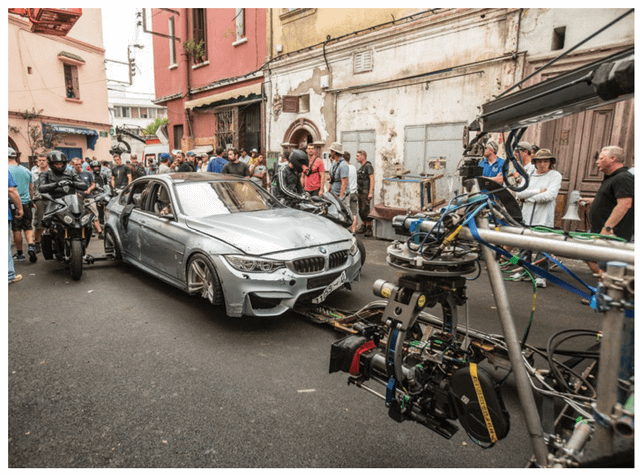
Luxury car brands like BMW use mass advertising not just to reach more people, but to build a symbolic price premium. There’s a limit to what buyers will pay for functional luxury features. Beyond that, value comes from non-owners recognizing that BMWs are high-performing, tasteful, and expensive.
BMW’s advertising must keep reinforcing this perception among non-owners, because it raises owners’ perceived status. Much of a BMW’s value lies in what ownership signals to others. Heated leather seats can’t create that on their own; it requires advertising, sponsorships, and product placements aimed at people who may never own a BMW. Both owners and non-owners need a visceral sense of how the car performs and feels different. This logic underlies BMW’s heavy investment in product placements in franchises like James Bond and Mission: Impossible, as well as in other dramatic settings that showcase performance.
This is also why marketing professor Mark Ritson is right that mass advertising remains essential, even in an era of hyper-targeted advertising and CRM. For mass-luxury brands like BMW, it is crucial to educate customers, prospects, and non-customers alike to preserve the symbolic value that drives outsized returns for the brand.
The value lies not only in customers’ minds but also in perceptions of the brand and its products across the entire network of customers and non-customers.
All Choices are Emotional Choices

As soon as the economy reached a point where customers had a wide range of choices about how to live their lives and solve their problems, it was inevitable that emotions would come to dominate, even in B2B markets, and especially in B2C. This is not a minor issue, but a central organizing principle of the 21st-century economy.
There is no choice without emotions, and there is no differentiation without emotional differentiation: if everything on offer felt the same, then customer choice itself would become inconsequential and random. This explains why commoditized products often try to raise the emotional stakes in marketing, in a bid to retain some emotional salience for their customers.
The role of emotion in human choice is not peripheral but central. Neurological research shows that individuals with damage to the brain regions responsible for processing emotion retain their intelligence and reasoning ability but struggle to make even simple choices, sometimes deliberating endlessly over trivial decisions that others would find easy. For those unfortunate individuals, this happens because when nothing feels any more or less important than anything else, decisions become extremely difficult, if not impossible.
When you go to a restaurant, you are not merely buying a combination of goods and services but a whole host of complex signals, feelings, and stagecraft that form part of the scaffolding of your life.
Why do the “things themselves” account for such a small part of the total value created?
Joseph Schumpeter’s concept of “creative destruction” describes this well: innovation generates a temporary advantage that is progressively eroded through imitation and competition. As that erosion repeats and compounds, value migrates away from narrow, isolated activities and towards bigger and bolder customer outcomes.
This shift is often misunderstood as mere abstraction. In fact, it reflects where competitive advantage actually resides.
Goods and services remain rooted in energy flows and industrial output, but direct manipulation of materials now accounts for only a tiny share of how competitive advantage is gained. While producing and delivering products remains essential, most value is now derived from the reasons, methods, and target audiences that inform and direct these actions. Value is generated through the effective coordination of multiple factors to fulfill customer-desired goals. Over time, unmet needs that earlier solutions overlooked become increasingly important, thereby elevating the complexity of future solutions.

Even when added value appears to stem from improved product performance, it is still largely driven by intangibles. Consider a superglue that bonds more strongly or cures faster. Here, the value lies less in the glue itself or the machines that produce it, and more in the patents, know-how, brands, and distribution systems that deliver reliable performance exactly where and when the customer needs it.
As customers’ simpler needs are satisfied, and concerns about basic issues like food sufficiency diminish, people shift their focus to the taste of food, its health effects, and how their food and drink choices support their bodies, self-image, and relationships, including how these choices are perceived by friends, colleagues, acquaintances, and loved ones.
Increasingly, the price consumers are willing to pay is more influenced by symbolic factors such as design, branding, scarcity, and status. Value combines practical features, the experience of purchasing and using the product, symbolic signals, and the overall effect of these elements on the customer’s relationships and emotions.
If you live in a world where there’s ample food available, the main feelings you are managing regarding food are related to health, status, and pleasure, including various “pleasure now v. pleasure later” trade-offs.
Many of us intuitively think that companies exist to “sell things”. That’s true, but trivial: the modern economy is really about shaping perception, trust, and meaning: what we might collectively call human emotion. Physical objects play an important role here, but human (customer) outcomes are decisive in the long term.
Many organizations have only partially caught up with this: marketing manages brand, product manages features, data teams manage insight, science teams and legal manage IP, and operations manage delivery. But the customer experiences one thing, not five. When these elements are misaligned, value is not just weakened—it is often destroyed at the point of interaction.
Coherence is the key
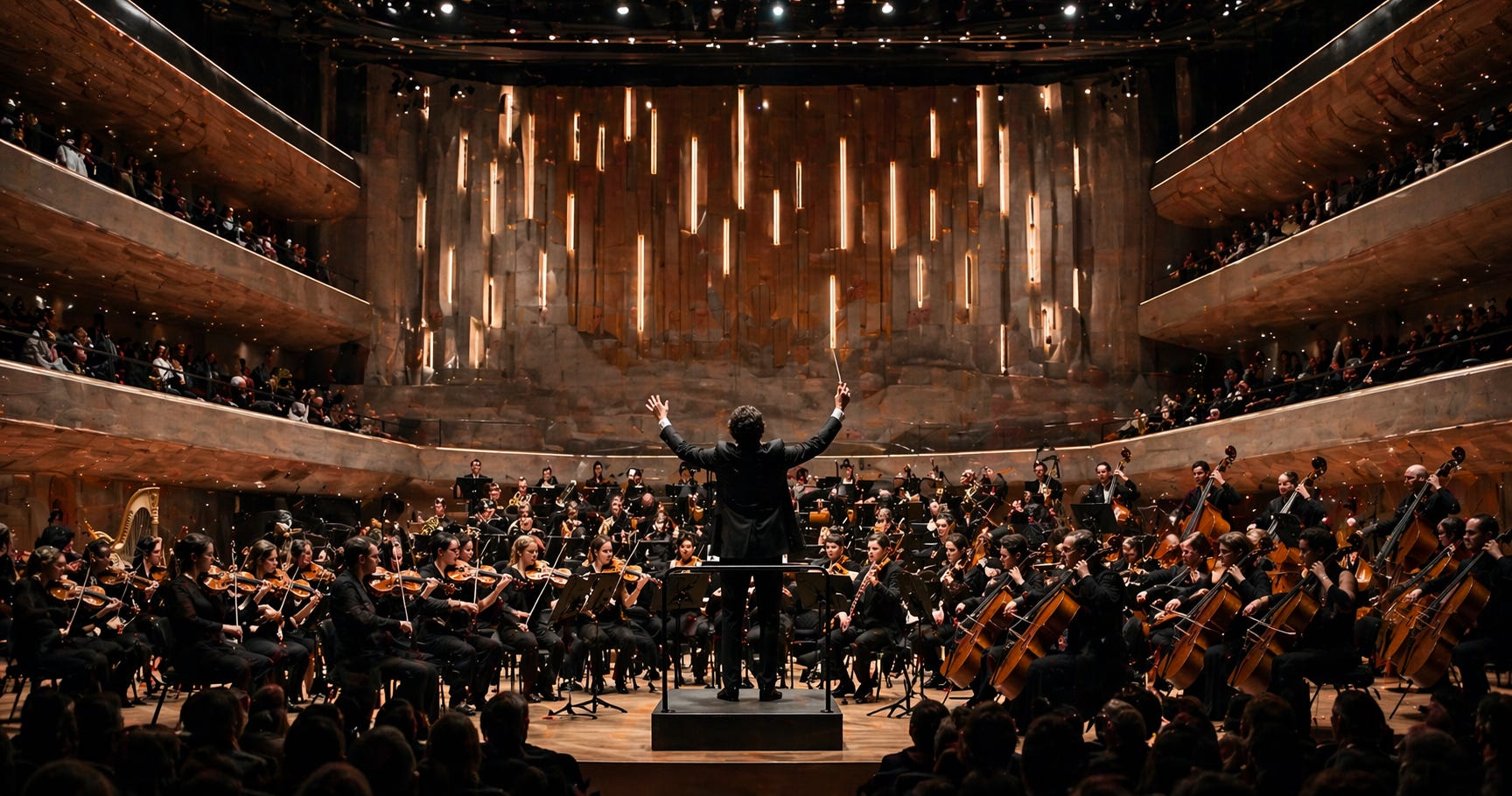
What ties all of this together is coherence: the ability to align multiple sources of value into a form that is legible, adoptable, and meaningful to the customer.
Treating ‘brand value’ too narrowly misses the broader perspective. Brand value isn't something that arises linearly from a nice logo and good design; it is the economic surplus generated by business models that create sufficient coherence to meet customers’ needs in uniquely valuable ways.
This was the real advantage at Apple under Steve Jobs: not just design, not just marketing, but coherence across the entire system.
In the essays that follow, we will go deeper into the specific types of intangible value — brand, data, IP, organizational knowledge — and more importantly, how to coordinate them into something coherent and powerful.
I would especially like to hear from people navigating these issues in their organizations. Please contribute your observations and questions here:
Feel free to share this with anyone you know who will find this framing useful.
About the Author
Simon Pearce is the founder and President of Emotif, a consultancy that helps businesses to better understand what their customers actually value — and build the coherence to deliver it.
Love this Simon. I'm a believer that the value is in the systems integration but integrating of what to produce what. The goal has to be trust and the intangibles as you mention. It's so much more complex than it used to be and brands have to keep up. With the introduction of ai brands will have to fully understand their flows but building the right flows is obviously the difference maker.
Great! It's all about the customer experience!